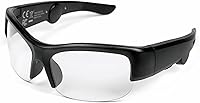
Overview

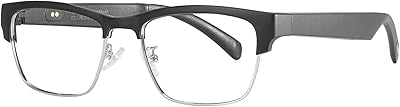
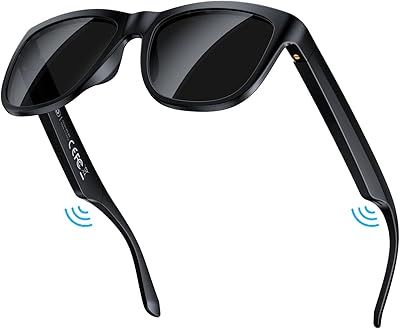
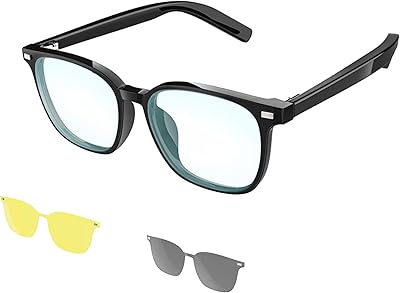
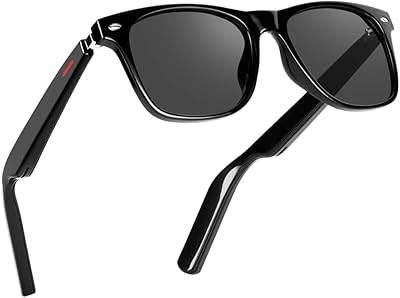
The 5BC Bluetooth Safety Glasses take an idea that sounds almost too convenient on paper — protective eyewear that doubles as wireless headphones — and make it a practical reality for workers and outdoor enthusiasts. Aimed squarely at tradespeople, cyclists, and daily commuters, this Bluetooth eyewear sits in a mid-range price bracket where it competes not against premium audio brands, but against the inconvenience of juggling two separate accessories. One genuinely useful detail: the glasses can pair with two devices simultaneously, so switching between a work phone and a personal phone takes seconds. Just go in knowing this is a practical workhorse, not a certified industrial safety product or a high-fidelity audio device.

Features & Benefits

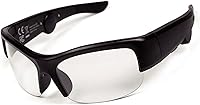
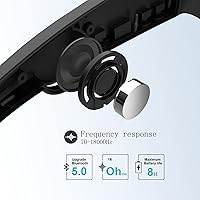
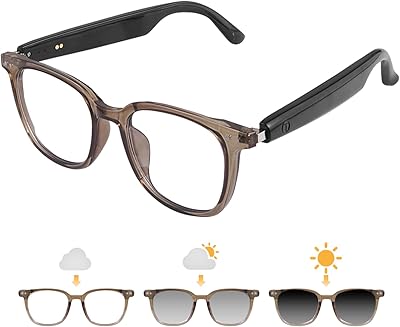
The clear polycarbonate lenses have a double-sided hard coating that holds up reasonably well against wind, dust, and flying debris on the job site — not a replacement for rated safety gear, but competent for general protection. The built-in speakers sit just in front of the ears, letting you hear your surroundings while still getting music or call audio through. Battery life is a genuine strength: eight hours of playback covers most full shifts without a mid-day charge. At 45g, they feel light enough to forget you're wearing them, and the 30-foot Bluetooth range gives you freedom to move around without pulling your phone out constantly.

Best For

These audio safety glasses make the most sense for people whose daily environment already demands eye protection. Warehouse staff, landscapers, and construction workers who want music during long shifts without stuffing earbuds under hearing protection will find real utility here. Cyclists and commuters appreciate the open-ear design for staying aware of traffic while still catching a podcast or a call. If you frequently take hands-free calls in dusty or windy conditions, the built-in microphone earns its keep. That said, if your workplace requires fully certified impact-rated eyewear, verify compliance independently — and if you expect earphone-quality audio, this Bluetooth eyewear will fall short of that bar.

User Feedback

Buyers consistently highlight the two-in-one convenience as the main draw — especially those who previously juggled separate glasses and wireless earbuds on the job. The most common frustration is volume: audio can seem surprisingly quiet out of the box until you learn that the phone's volume must be raised first, then the glasses adjusted separately — a useful quirk to know upfront rather than a dealbreaker. Fit earns mixed reactions, with the frame suiting average face shapes well but feeling wide on narrower faces. Call quality in loud outdoor environments gets described as passable. Long-term durability is generally decent, though hinge wear shows up with heavy daily use.

Pros

  • Combines eye protection and wireless audio into one lightweight accessory, cutting down on gear to manage during a workshift.
  • Eight hours of battery life is genuinely enough to cover most full working days without hunting for a charger.
  • Pairing with two devices at once makes switching between a work phone and personal phone quick and hassle-free.
  • At 45 grams, these audio safety glasses are light enough to wear all day without noticeable fatigue.
  • Open-ear speaker placement keeps you aware of your surroundings, which matters on a bike, on the road, or on a busy job site.
  • The built-in microphone handles hands-free calls competently in moderate outdoor conditions.
  • Hard-coated polycarbonate lenses hold up well against wind, dust, and light debris for general outdoor use.
  • Voice assistant access means you can control your phone without ever taking it out of your pocket.
  • The 30-foot Bluetooth range gives you real freedom of movement without losing connection.
  • For buyers consolidating two accessories into one, the value proposition is straightforward and honest.

Cons

  • Audio volume out of the box feels low until you learn to raise phone volume first, then adjust the glasses separately — an unintuitive two-step process.
  • Sound quality falls noticeably short of dedicated wireless earbuds at a similar price point.
  • Call clarity in genuinely noisy environments — heavy machinery, strong wind — is inconsistent and unreliable.
  • The frame runs wide, which means a poor fit for people with narrower or smaller face shapes.
  • No confirmed compliance with certified industrial safety standards, limiting use in regulated workplace environments.
  • Hinge durability has been flagged by longer-term users, with wear appearing after sustained daily use.
  • The Bluetooth pairing process requires holding a button for five seconds in a specific power-off state, which is less intuitive than most modern devices.
  • Open-ear audio means people nearby can faintly hear what you are listening to in quiet settings.
  • Limited color and lens tint options reduce versatility for different lighting conditions or personal preference.

Ratings

Our AI rating system analyzed verified buyer reviews for the 5BC Bluetooth Safety Glasses from across multiple global markets, actively filtering out incentivized submissions, duplicate accounts, and bot activity to surface what real users actually experienced day to day. Scores reflect both the genuine strengths that keep buyers satisfied and the recurring pain points that show up consistently enough to matter. Nothing here is averaged into vagueness — the numbers are calibrated to reflect where this Bluetooth eyewear earns its keep and where it falls short.

Convenience & Concept
88%
The two-in-one proposition resonates strongly with workers who used to juggle separate safety glasses and earbuds every shift. Buyers on construction sites and warehouse floors consistently praise how much simpler their daily setup has become — one accessory on, and they are good to go.
A small number of reviewers note that the novelty wears off if the audio quality disappoints, making the convenience feel less meaningful. For buyers who prioritize sound above all else, the concept alone does not fully compensate for the compromises.
Audio Quality
61%
39%
For background music during physical outdoor work, the built-in speakers perform adequately — the open-ear delivery keeps audio present without being intrusive, which cyclists and commuters in particular find suits their need for ambient awareness.
Buyers comparing these audio safety glasses directly to wireless earbuds at a similar price point consistently find the sound quality lacking in clarity, depth, and volume ceiling. Bass response is thin, and the open-ear design inherently limits how immersive the listening experience can be.
Battery Life
84%
Eight hours of continuous playback is a genuine differentiator here. Workers on full shifts report finishing the day with battery to spare, which removes the mid-day charging anxiety that plagues shorter-life wearables and makes these a reliable all-day companion.
Charge time details are not well documented, which frustrates buyers who need to plan around overnight charging routines. A small number of users report battery degradation after several months of heavy daily use, though this is not yet a dominant complaint pattern.
Microphone & Call Quality
63%
37%
In calm outdoor environments — a quiet parking lot, an open field, or a low-traffic street — the built-in microphone handles calls well enough that callers on the other end have no complaints. Voice assistant triggering also works reliably in these conditions.
In genuinely noisy settings like active job sites or roadside environments, call quality deteriorates noticeably. Multiple reviewers mention that wind noise in particular gets picked up aggressively, making calls unreliable precisely in the conditions where hands-free calling would be most useful.
Comfort & Wearability
71%
29%
At 45 grams, the frame is genuinely light, and most buyers with average face widths report they can wear these for hours without discomfort. The slim temple design also accommodates most standard hard hat styles, which is a meaningful practical win for tradespeople.
Users with narrower or smaller faces consistently flag the frame as too wide, resulting in slipping and pressure points during extended wear. There is no adjustable nose bridge or temple length option, so buyers outside the average fit range have little recourse.
Build Quality
67%
33%
The frame feels solid enough for general work environments, and the polycarbonate lenses resist minor scratches reasonably well under daily use. First impressions on unboxing are generally positive, with buyers noting the build feels better than the price might suggest.
Longer-term feedback tells a different story — hinge wear is a recurring complaint from buyers who use these every single day, with some reporting looseness or wobble after a few months. The overall construction does not feel engineered for the kind of punishment a primary work accessory endures over years.
Lens Protection
74%
26%
The hard-coated polycarbonate lenses do a credible job of blocking wind, dust, and light flying debris, which is exactly what landscapers, cyclists, and general outdoor workers need. The clear lens offers good visible light transmission across a wide range of lighting conditions.
The product does not confirm compliance with certified safety standards like ANSI Z87.1, which limits its credibility in regulated work environments. Buyers who need certified protective eyewear for their site cannot rely on these glasses as their primary PPE without independent verification.
Bluetooth Pairing & Connectivity
72%
28%
Dual-device pairing is a standout feature that works reliably in practice — most buyers find that once they understand the pairing process, switching between a work and personal phone becomes quick and intuitive. Connection stability within the 30-foot range is generally solid.
The initial pairing process is more involved than most modern Bluetooth devices, requiring a 5-second hold in a powered-off state — a step that confuses new users and generates a disproportionate share of early negative reviews. Re-pairing after a reset is not plug-and-play.
Volume Controls
58%
42%
Once users learn that phone volume must be maximized before adjusting the glasses volume, the two-stage control system becomes manageable and the audio reaches a workable listening level for most casual use cases in reasonably quiet environments.
The two-step volume dependency — raise phone first, then raise glasses — is consistently cited as a frustrating design quirk that is not documented clearly out of the box. Many buyers assume the glasses are defective before discovering this workaround, which damages the out-of-box experience significantly.
Value for Money
76%
24%
Buyers who go in with calibrated expectations — basic eye protection plus functional wireless audio — tend to feel the price is fair for what is delivered. Compared to buying a pair of safety glasses and a set of wireless earbuds separately, the consolidated cost is genuinely attractive.
Buyers who expected premium audio or certified safety performance feel the price is too high for what they received. The value perception is heavily dependent on what the buyer prioritizes, making this a polarizing product in terms of perceived worth.
Open-Ear Awareness
81%
19%
Cyclists and commuters repeatedly highlight the open-ear design as a key reason they chose this Bluetooth eyewear over traditional earbuds. Being able to hear approaching vehicles, pedestrians, or coworkers without removing anything feels meaningfully safer for active outdoor use.
The same openness that enables situational awareness also means people nearby can faintly hear what you are listening to in quiet settings, which some buyers find awkward in shared office environments or public transport.
Setup & Instructions
53%
47%
Once fully set up, the glasses operate intuitively enough that daily use becomes routine. Buyers who take time to read third-party guides or watch setup videos report a much smoother experience and tend to rate the product significantly higher overall.
The included documentation is thin and poorly worded, leading to widespread confusion around pairing mode, volume sequencing, and device switching. A disproportionate share of negative reviews stem directly from setup frustration rather than hardware failure, which points to an avoidable documentation problem.
Situational Versatility
69%
31%
The glasses cover a genuinely broad range of outdoor and work scenarios credibly — cycling, warehouse work, light construction, driving, and landscaping all appear in positive reviews as real-world use cases where buyers found them useful on a regular basis.
They are less suited to scenarios requiring high acoustic isolation, formal settings, or compliance-heavy work environments. Users who want one pair of glasses that handles both a regulated job site and a weekend ride may find the glasses too limited for the former to justify the trade-off.

Suitable for:

The 5BC Bluetooth Safety Glasses are a smart pick for anyone whose job or hobby already puts them in environments where eye protection makes sense, and who is tired of managing earbuds on top of everything else. Warehouse workers, landscapers, and light construction staff will get the most out of these — a single accessory handles both debris protection and hands-free audio across a full eight-hour shift without needing a recharge. Cyclists and outdoor commuters are another natural fit, since the open-ear speaker design lets traffic and ambient noise come through while still delivering music or podcast audio clearly enough for casual listening. If you regularly take calls while working outdoors in dusty or windy conditions, the built-in microphone means you can answer without fumbling for your phone. Anyone trying to consolidate gear and cut down on what they carry to the job site will find these audio safety glasses offer a genuinely practical trade-off.

Not suitable for:

Buyers who need rigorously certified eye protection should approach the 5BC Bluetooth Safety Glasses with caution — the listing does not confirm compliance with ANSI Z87.1 or equivalent industrial safety standards, so workplaces with strict PPE requirements may not accept them as compliant gear. If high-quality audio is a priority, this Bluetooth eyewear will disappoint; the open-ear speakers are functional for casual listening but do not compete with even modestly priced wireless earbuds on sound clarity or volume output. People with narrow or smaller face shapes may find the frame wide and uncomfortable over long periods, which is worth considering before buying. Those working in very loud environments — heavy machinery, power tools at close range — will likely find call quality too inconsistent to rely on. Finally, buyers expecting a plug-and-play volume experience should know upfront that the phone volume needs to be raised independently before the glasses volume controls take effect, which can feel counterintuitive if you go in blind.

Specifications

  • Lens Material: Lenses are made from high-impact polycarbonate, offering a strong resistance to impact, wind, and airborne debris for general outdoor and work use.
  • Lens Type: Clear lenses provide full visible light transmission, making them suitable for indoor work environments and low-light outdoor conditions.
  • Lens Coating: A double-sided hard coating is applied to both interior and exterior lens surfaces to resist scratching during everyday handling and use.
  • Audio Connectivity: The glasses connect to smartphones and other devices via Bluetooth wireless technology, eliminating the need for any audio cables.
  • Device Pairing: Up to two Bluetooth devices can be paired and connected simultaneously, allowing quick switching between a work phone and a personal device.
  • Battery Life: The built-in rechargeable lithium polymer battery supports up to 8 hours of continuous audio playback on a full charge.
  • Bluetooth Range: A wireless range of approximately 30 feet (around 9 meters) allows reasonable freedom of movement from the paired device.
  • Weight: The full frame assembly weighs 45 grams, keeping the glasses light enough for extended daily wear without significant fatigue.
  • Microphone: A built-in microphone is integrated into the frame to support hands-free phone calls and voice assistant commands.
  • Voice Assistant: The glasses are compatible with smartphone voice assistants, allowing users to trigger Siri, Google Assistant, or similar services without touching their phone.
  • Gender Fit: The frame is designed as a unisex style, intended to fit a broad range of adult face shapes and sizes.
  • Package Dimensions: The product ships in packaging measuring 7.44 x 3.19 x 2.64 inches, suitable for compact storage or transport.
  • Use Cases: Designed for use across work sites, cycling, driving, and general outdoor activities where both eye protection and audio access are useful.
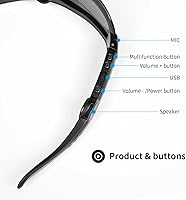
  • Power Button: The power and pairing functions are controlled via a dedicated button on the frame, with pairing mode activated by a 5-second hold.
  • Volume Control: Dedicated volume buttons on the glasses frame adjust speaker output, but the paired device volume must be set first for full effect.

Related Reviews
Meagtlva Bluetooth Glasses Mk1
82%
82%
Audio Quality
88%
Comfort and Fit
90%
Battery Life
84%
Build Quality
79%
Ease of Use
More
GS038 Bluetooth Audio Sunglasses
71%
83%
Value for Money
79%
Comfort & Fit
58%
Audio Quality
71%
Call Quality
74%
Battery Life
More
XO GS01 Bluetooth Audio Sunglasses
72%
88%
Value for Money
61%
Audio Quality
43%
Sound Leakage
67%
Battery Life
82%
Comfort & Fit
More
WOWRIO A8 Bluetooth Audio Cycling Glasses
76%
71%
Audio Quality
68%
Call & Mic Performance
83%
Comfort & Fit
66%
Battery Life
74%
Lens Quality & UV Protection
More
Giinova Ai Bluetooth Glasses M03
84%
91%
Translation Accuracy
88%
Audio Clarity
73%
Battery Life
85%
Build Quality
89%
Lens Functionality
More
GenXenon GS07 Bluetooth Audio Smart Glasses
84%
88%
Bluetooth Audio Quality
76%
Battery Life
91%
Comfort & Fit
89%
Hands-Free Functionality
82%
Waterproof Durability
More
Smart Bluetooth Audio Glasses G05-T3
84%
89%
Hands-Free Calling Performance
92%
Bluetooth Connectivity
74%
Sound Quality
78%
Comfort & Fit
85%
Battery Life
More
E10-C Smart Glasses Bluetooth Sunglasses
84%
88%
Comfort and Fit
91%
Battery Life
72%
Sound Quality
85%
Ease of Use
80%
Build Quality
More
RUIMEN Bluetooth Audio Smart Glasses AJ01
81%
83%
Audio Quality
89%
Comfort and Fit
78%
Battery Life
85%
Water Resistance
74%
Voice Control Functionality
More
KONLEYA J6-5 Bluetooth Smart Glasses
66%
71%
Audio Quality
44%
Audio Leakage
68%
Battery Life
66%
Comfort & Fit
58%
Build Quality
More

FAQ

This catches a lot of people off guard. You need to turn up the volume on your phone first before adjusting the volume on the glasses themselves. The glasses volume control only works within the ceiling set by your phone, so if your phone is at 30%, the glasses will never get very loud. Crank your phone to maximum first, then use the glasses buttons to find your preferred level.

Yes, the glasses support simultaneous pairing with two Bluetooth devices. You can have both connected at once, which is handy if you want music from a tablet but need to take calls from your phone without going through a reconnection process each time.

The lenses are made from impact-resistant polycarbonate with a hard coating, which offers real protection against wind, dust, and light debris. However, the product listing does not confirm compliance with ANSI Z87.1 or equivalent certified safety standards, so if your workplace has strict PPE requirements, you should verify compliance independently before relying on these as your primary protective eyewear.

Start with the glasses fully powered off, then press and hold the power button for a full 5 seconds until you see the red and green indicator lights flashing alternately — that means they are in pairing mode. From there, open Bluetooth on your phone and look for Vision 5A or 5B in the device list, tap it, and confirm the pairing prompt.

Many users wear these under standard hard hats without a problem, since the frame sits close to the face and the speaker housings along the temples are relatively slim. That said, fit can vary depending on the helmet style, so there is some trial and error involved if your helmet has a tight or contoured interior.

In moderate outdoor conditions — light wind, general background noise — the microphone performs well enough for routine calls. In genuinely loud environments like near running power tools or heavy machinery, callers on the other end may notice degraded audio quality. For very noisy sites, this Bluetooth eyewear is better suited to music listening than critical calls.

Yes, and this is actually one of the strongest use cases for these glasses. Because the speakers sit just in front of the ear rather than inside the ear canal, ambient sound like traffic, other cyclists, and road noise still reaches you naturally. You get audio without the tunnel effect of traditional earbuds.

The product listing does not specify an exact charge time, which is a gap worth noting. The glasses use a built-in lithium polymer battery that is rechargeable via a cable included in the package. If charge time is critical to your workflow, it is worth checking with the seller directly for that detail.

Yes, Bluetooth connectivity is platform-agnostic, so these audio safety glasses pair with both Android and iOS devices. Voice assistant access also works on both platforms, though the specific assistant that activates will depend on whatever is set up as the default on your phone.

Use a soft microfiber cloth and avoid abrasive materials or alcohol-based cleaning sprays, as these can strip or cloud the hard coating over time. A gentle lens cleaning solution designed for polycarbonate lenses is your safest option. Avoid wiping the lenses dry with rough fabrics like paper towels or work shirts, since that is the most common way the coating gets scratched prematurely.